


From Odisha’s Ponds to the World Stage: How Aquapulse is Redefining Responsible Seafood
When the Global Seafood Alliance named Aquapulse a global finalist in the Aquaculture category of the Responsible Seafood Innovation Awards 2026, the recognition signalled more than a startup...

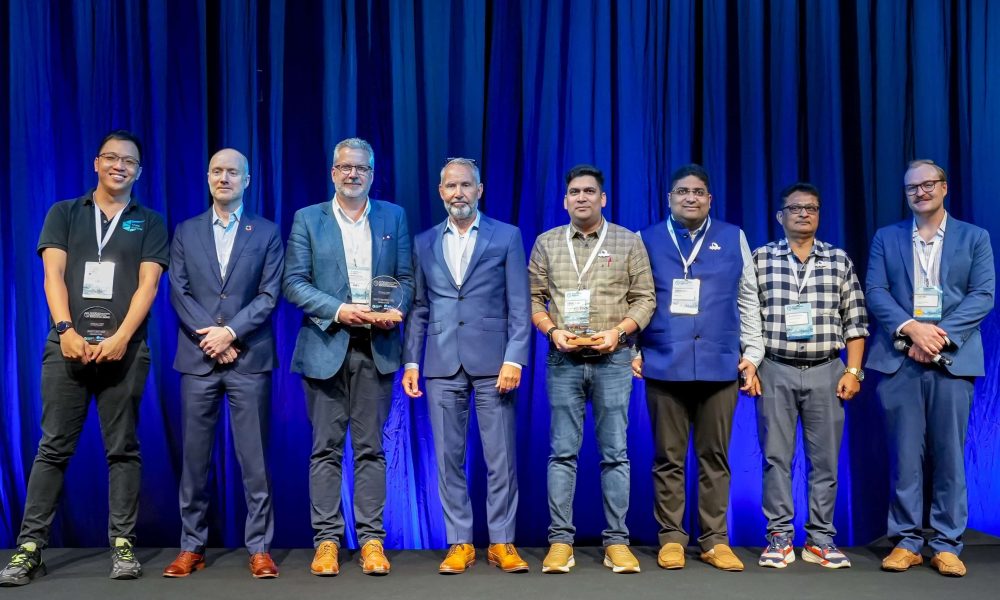
When the Global Seafood Alliance named Aquapulse a global finalist in the Aquaculture category of the Responsible Seafood Innovation Awards 2026, the recognition signalled more than a startup milestone. It placed a three-year-old Bhubaneswar company, founded by brothers Abhishek and Abhilash Dwivedy along with Ananya Mohapatra, among a select group of innovators addressing persistent challenges in the global seafood supply chain. The awards were presented on 22 September during the 25th Responsible Seafood Summit at Bangkok’s Shangri-La Hotel, where Aquapulse presented its platform to international delegates and buyers. For a firm that aggregates smallholder shrimp farmers across Odisha, Andhra Pradesh, and West Bengal while managing the export readiness of their harvests, the platform appearance offered external validation of a model that seeks to align technology, transparency, and farmer income.
Table Of Content
Bridging High Technology and Smallholder Farmers
Aquapulse was established in 2023 around a clear operational insight: smallholder shrimp farmers remain the backbone of India’s aquaculture sector yet frequently encounter structural constraints that limit price realisation and market access. The company has responded by combining aggregation with proprietary technology that tracks a single harvest from the farm pond to the export vessel. Its award entry highlighted four in-house platforms. A computer-vision diagnostics system analyses field photographs of the pond ahead of harvest. Dual-score verification then generates two distinct, objective scores—one for overall pond health and another for harvest clearance. Where quality or safety thresholds are not met, the harvest is held back, protecting both the exporter and the downstream consumer. Farmers whose produce meets full export-readiness standards receive a premium above the prevailing local market rate on the day of harvest.
This architecture is designed to convert field data into commercial outcomes rather than treating verification solely as a compliance exercise. Recent reporting indicates that farmers in the network have seen a 3–5 percent benefit in price realisation alongside greater continuity of market access across crop cycles. The firm has also expanded its technology stack, unveiling connected platforms at its October 2026 annual meet that cover pond health assessment, crop-cycle records, trade intelligence, and export compliance documentation. Collectively, these tools support a pond-to-port model intended to give buyers a single, traceable record while returning value to the producer who generated the underlying data.
Flipping the Script on Traceability and Navigating Industry Shifts
Conventional seafood supply chains typically allocate the cost of data collection and traceability to the primary producer while concentrating the commercial benefit with buyers. Aquapulse has sought to reverse that distribution. As Abhilash Dwivedy, Co-Founder and Chief Growth Officer, has stated: “In this business the cost of traceability usually sits with the farmer and the benefit sits with the buyer. We have tried to close that loop the other way round. The data travels with the product, and the farmer who built it is paid for it.” By converting field observations into verifiable quality scores, the company enables farmers to monetise the integrity of their practices. Data functions not merely as a compliance record but as a direct multiplier of farmer income.
The approach arrives amid heightened pressures on Indian shrimp exports. India remains the world’s second-largest shrimp exporter after Ecuador, yet producers face shifting United States tariff policies and softening global prices. At the Bangkok summit, attended by major retail and food-service buyers including Albertsons, Red Lobster, Waitrose, and Walmart, the prevailing demand was clear: verifiable sustainability, uncompromising safety standards, and transparent supply chains. Innovation has become essential for resilience. Aquapulse enters this environment with an Indian patent application published and under examination, a registered design, and recognition under the DPIIT startup framework. These elements provide a foundation for scaling technology that aims to keep Indian aquaculture competitive in markets that increasingly require documented origin and process integrity.
TheFounders+ View
From the perspective of TheFounders+, Aquapulse illustrates a practical response to a structural problem that has long constrained value capture for India’s smallholder aquaculture producers. The combination of aggregation, AI-driven diagnostics, dual-score verification, and a pricing mechanism that rewards export readiness offers a coherent attempt to redistribute both risk and return toward the farm gate. Its selection as a finalist at the Responsible Seafood Innovation Awards, alongside expansion plans that include growing the farmer network and increasing procurement volumes, positions the company as a relevant case study in how Indian agritech ventures can meet rising global evidentiary standards without externalising costs onto producers. Execution risks remain—particularly around consistent technology adoption, quality control at scale, and the durability of premium pricing in volatile commodity markets—yet the model’s focus on making traceability a source of farmer income rather than a pure compliance burden marks a meaningful departure from conventional supply-chain practice. For founders, policymakers, and investors examining pathways to strengthen India’s position in responsible seafood, Aquapulse’s trajectory from Odisha ponds to a global awards stage warrants close attention as a test of whether technology can close the gap between responsible production and equitable returns.